
 CLOSE SIDEBAR
SBP 21 - Efficiency of Different Disinfectants on Bacillus cereus Biofilms on Stainless-Steel Surfaces in Contact with Milk
Science Based Projects
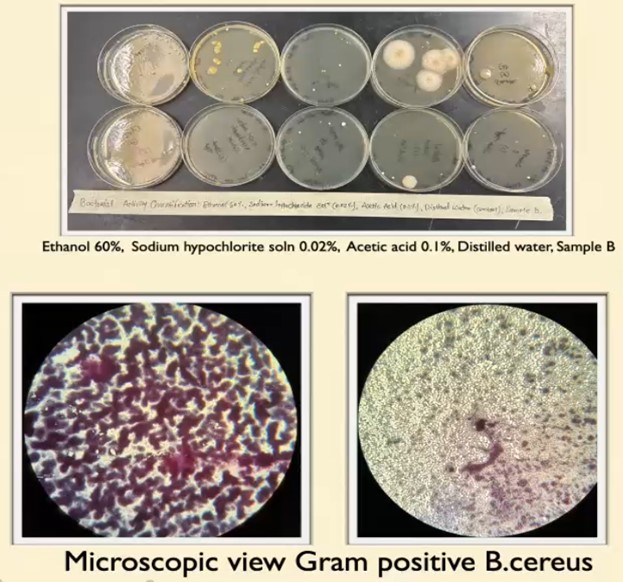
Biofilms poises a significant risk in the ever-changing field of food safety, especially in the dairy sector where stainless-steel surfaces are used extensively. The purpose of this study is to investigate the effectiveness of different disinfectants in removing Bacillus cereus biofilms from stainless steel surfaces which is an important part of keeping food processing facilities clean and free of infection. Biofilms of Bacillus cereus have potent great risk to food safety, resulting in decreased milk yield and cases of foodborne illness. The project intends to improve food safety and public health by offering data-driven recommendations for cleaning technique optimization. The effectiveness of "Clean-In-Place" (CIP) system using acetic acid, ethanol, and hydrogen peroxide on B. cereus biofilms on stainless steel surfaces was assessed. The study conclusively showed that acetic acid is more effective than other disinfectants at removing Bacillus cereus biofilms from stainless-steel surfaces that come into contact with milk. Comparing acetic acid to other disinfectants, the quantitative analysis showed much reduced bacterial counts, thus highlighting the substance's significance in preventing growth of biofilms, improving food safety, and hygiene practices in the dairy industry. The results support the on-going efforts to improve food safety in the dairy industry and highlight the need for customized cleaning solutions.
Updated
2 years ago
Powered by Acadiate
© 2011-2026, Acadiate Inc. or its affiliates · Privacy