 CLOSE SIDEBAR
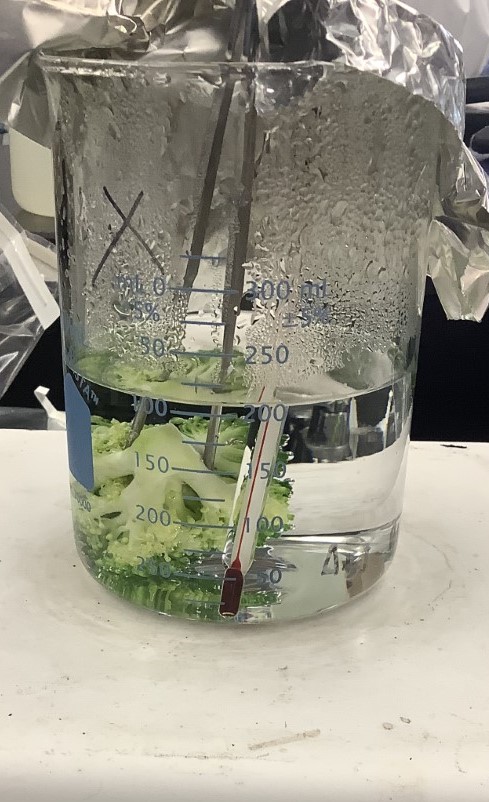
Effectiveness of blanching temperature and timing on broccoli samples inoculated with Salmonella
Hot water blanching is a thermal blanching method that destroys the microorganisms contaminating different products. The effectiveness of hot water blanching is dependent on variables like the temperature of the water bath and the exposure time of the product while immersed at this temperature, and those variables may vary between different products. In the case of broccoli, one of the most loved and purchased products because of its antioxidants and anticarcinogens and because of its health-promoting qualities, recalls are common because of the possible contamination of foodborne pathogens like Salmonella. In previous studies, it was possible to determine the optimal temperature as 85°C and the optimal exposure time of 30 seconds for the hot water blanching for mixed samples with other products than broccoli inoculated with a cocktail of different microorganisms, not just Salmonella. In this experiment, only broccoli samples inoculated just with Salmonella would be used, and two types of experiments would be developed; the first where the exposure time will be fixed and the temperature will be varied to find the optimal temperature and with this perform the second experiment in which this temperature will be fixed and the exposure time will be varied in order to find in the same way its optimal value. Thus, the significance of this project is to determine the effectiveness of hot water blanching specifically on broccoli samples inoculated with Salmonella, based on different exposure times and temperatures, in order to identify the most optimal values to decontaminate this product against this microorganism without causing damage to its quality.

Powered by Acadiate
© 2011-2026, Acadiate Inc. or its affiliates · Privacy