
 CLOSE SIDEBAR
SBP 11 - Innovative Preservation Techniques for Extending the Shelf Life of Strawberries Using Nanoparticle Coatings and UV-C Treatment.
Strawberries are known to be highly perishable products meaning that they must be handled with proper care in order to increase their quality and shelf life as they are highly prone to spoiling due to microbial growth. The ongoing project seeks to address the challenge of postharvest losses caused by poor handling and preservation of strawberries and focuses on two techniques: the use of nanoparticles coating, and the application of ultraviolet-C (UV-C) treatment. The research addresses the use of Carboxymethyl Cellulose (CMC), Hydroxypropyl Methylcellulose (HPMC), and Chitosan (CH), coated, singly or in mixed formulations and UV-C treatment. The main aim is to see how these treatments affect deterioration or decay aspects of fresh strawberries samples over a twelve (15) day period. The aim is to assess the microbial changes, weight and qualitative changes sustained in strawberries during this period of 15 days. To initiate the experiment, strawberries were purchased from No Frills and cleaned with 2% sodium hypochlorite solution and then several treatments were conducted such as coating with CMC, HPMC, and CH alone or in combination and treating them with UV-C light. For comparative purposes, the untreated strawberries were used as a control.
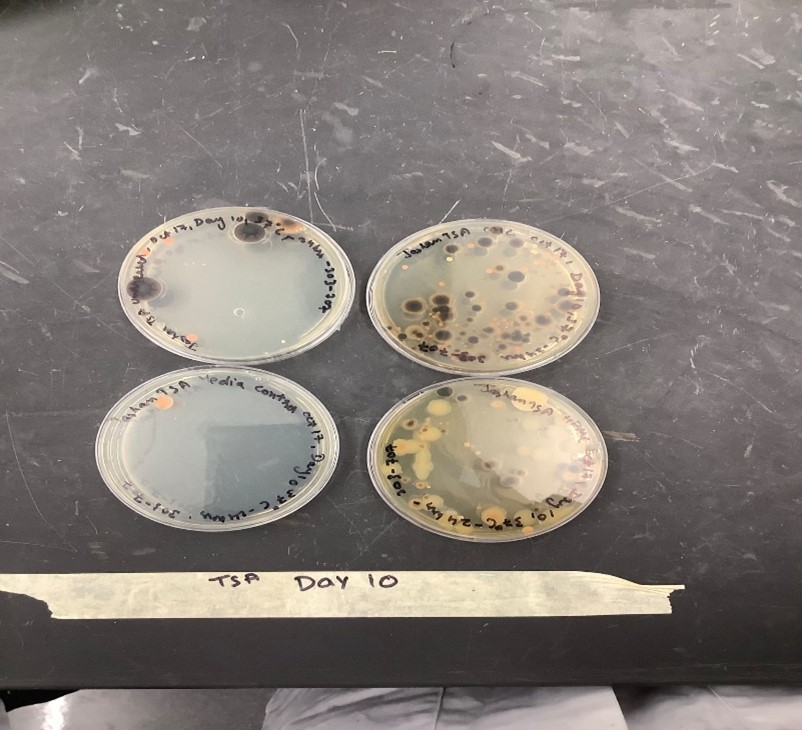
Following treatment, the strawberries underwent air-drying, and their quality was evaluated through various factors such as weight loss, decay rate, sensory attributes, and microbial contamination. The coatings were created by dissolving the corresponding powders in solutions through chemical methods. Plasticizers like glycerol monostearate were included to enhance the flexibility of the coating and shorten drying times. Coatings of CMC and HPMC were prepared with a blend of alcohol and water, whereas the CH coating was created by dissolving in a gentle acetic acid solution. Every strawberry was immersed in the solutions for two minutes to guarantee uniform coverage. The UV-C treatment consisted of subjecting the strawberries to UV light at a wavelength of 275 nm for two minutes, aimed at sterilizing the surface and preventing microbial growth. The effectiveness of each treatment was assessed using various metrics. The percentage of weight loss, indicating moisture retention, was determined by comparing the initial and final weight of the strawberries. The decay percentage was determined by spotting spoiled strawberries, providing information on the overall shelf life of every treatment. Sensory assessments evaluated the freshness, texture, and appearance of the strawberries, which are essential for consumer approval. Microbiological analysis involved plating strawberry samples on Tryptic Soy Agar (TSA) for bacteria and Sabouraud Dextrose Agar (SDA) for fungi, with colony counting carried out post-incubation.
The study's findings showed notable variations in the effectiveness of each treatment. Nanoparticle coatings, especially Chitosan (CH), demonstrated the most encouraging outcomes in minimizing weight loss, spoilage, and microbial contamination. A mixture of CH and HPMC improved the preservation of strawberries even more. Although UV-C treatment successfully diminished microbial growth, its effect on weight loss and spoilage was not as significant when compared to the coatings. This indicates that coatings made from nanoparticles, particularly when used in combination, offer enhanced protection for strawberries, prolonging their shelf life while maintaining quality. UV-C treatment continues to be an effective choice for decreasing surface microbial levels. This study aids in the advancement of sustainable and efficient preservation techniques in the food sector. The integration of natural polymer coatings with UV-C treatment offers a hopeful approach to prolonging the shelf life of strawberries, minimizing waste, and delivering high-quality produce to consumers. The practical consequences of this research are particularly significant for commercial strawberry cultivation, where reducing spoilage and preserving product quality are essential for success in the market. This project provides a basis for future studies in food preservation technologies by exploring these sophisticated preservation methods, which could be utilized for different types of perishable fruits. This initiative seeks to offer creative solutions for the food sector by utilizing new technologies to improve food preservation, minimize waste, and boost the availability of fresh, premium produce.
Updated
1 year ago
Powered by Acadiate
© 2011-2026, Acadiate Inc. or its affiliates · Privacy