
 CLOSE SIDEBAR
IT 05 - 3D Horror Video Game
IT Projects
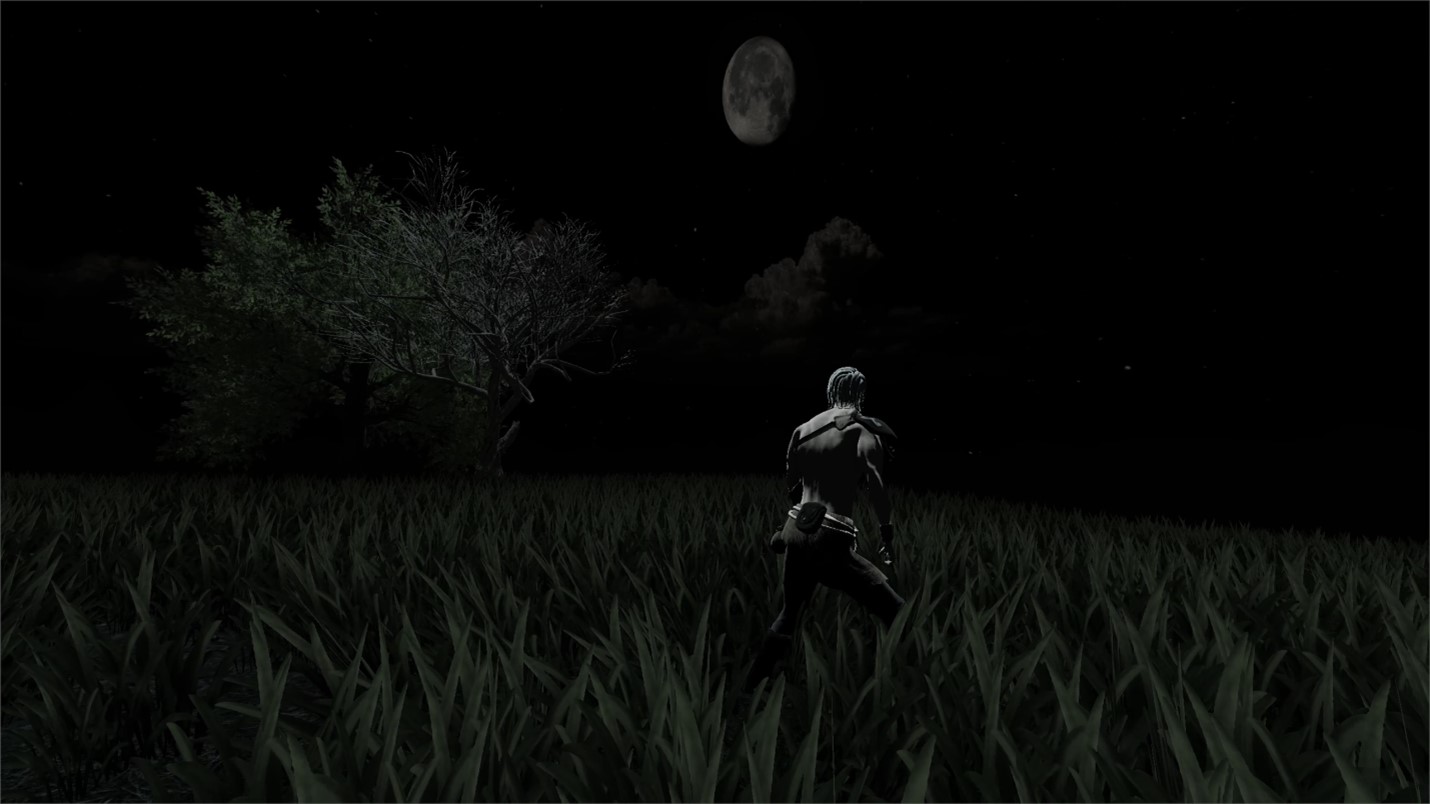
"3D Horror Video Game" is the terrible spawn which crawled out of my love for the horror genre and systems design. It is a 3D action horror game about navigating a forest veiled in foreboding darkness. The player must evade roaming danger in order to find and destroy the source of evil living there. In the heart of a moonlit glade, the player navigates through the blackness using a modern action-movement system. On their journey, they will discover locations which convey narrative and provide the player with skill-based combat encounters.
This project is focused on three pillars of design: Atmosphere, Lurking Danger, and Stealth. The player should immediately be affected by the oppressive darkness and all-encompassing atmosphere induced by being alone in wild woodland. They should fear what is lurking beyond the curtain of darkness. They should want to be quiet.
The player can be controlled via mouse and keyboard. They can adjust the camera zoom and position. The player can sneak, walk, jog, run, jump, roll and swing their sword. Enemies spawn around the player at random intervals and locations. Their numbers swell in the forest as the game continues.
The player can string together three separate ‘light attacks’, do a quick triple attack, perform a heavy attack, or do a spinning attack while blocking.
The player switches between walking and jogging with a toggle button. While walking they may choose to sneak by holding down a button (shift). While jogging they may choose to instead sprint by holding down the same button.
The player can dodge or roll away from incoming attacks. They can perform their own attacks using a long-sword. Fighting is a short and brutal affair with immediate game-ending consequences. If the player is hit 5 times they will be knocked down. Once the player is knocked down they will lose one of two health points. After losing both health points a game over screen will be delivered.
In order to control whether an enemy has detected the player, a 3D collision shape is used. Its size is transformed by the player’s behaviour. Certain actions such as running and rolling will cause the size to increase, while other actions will cause it to contract. When enemies collide with this sphere, they will change their behaviour from idle or roam, to ‘hunt for player’.
The 3D environment is designed to be both striking and interactive. The terrain features modular rock formations; each fully textured and integrated with grass to create a seamless and natural forest landscape. Of course there is also a variety of tree species and a moody skybox. These static bodies are crucial for the game's navigation mesh, which guides the AI of enemy characters, allowing them to intelligently traverse the rocky terrain and avoid trees. A GPU Particle instance is used to generate a dynamic falling leaf effect, adding to the spooky ambiance.
The enemy AI uses a static nav-point system for destination setting. This allows creatures to roam the forest in an unpredictable manner, independent of the player's location. This system is built on an array of 3D Nodes with xyz coordinates, strategically placed across the level. This array is also useful for allowing enemies to adjust their approach towards the player in order to avoid direct collisions with each other.
Spatial audio effects are used to create an immersive aural environment, complete with varied sound effects like footsteps and attack whooshes. This auditory layer is integral to building the game's suspenseful atmosphere.
One of the latest updates ads an event trigger system, which allows for sequential storytelling and jump scares.
The camera system has camera shake functionality, triggering during player hits; adding to the sense of urgency in combat.
This project was made in Godot 4.1, a free and open-source game development engine. This project’s code is written in Godot’s own language known as GDScript, which shares many similarities with Python.
The meshes were purchased from indie online creators selling their 3D art at online marketplaces. Likewise, the audio files and their rights were purchased from an online sound effect distributor.
Two other critical pieces of software required to make this project are Blender and Audacity. These are also free and open source software.
I created this project because I enjoy the level of self-expression it facilitates. My electronics engineering curriculum included some substantial programming courses. These gave me a strong understanding of programming fundamentals, which allowed me to start building these systems in 3D. It is my contention that there is a horror video game renaissance going on in 2023. It is spurred on by indie game developers who mostly post their work online for free. Some of these works I considered to be high art. I was inspired by these indie game developers and wanted to contribute to this vibrant community.
Updated
2 years ago
Powered by Acadiate
© 2011-2026, Acadiate Inc. or its affiliates · Privacy