 CLOSE SIDEBAR
EMG based Prosthetic Hand
Live to Experience
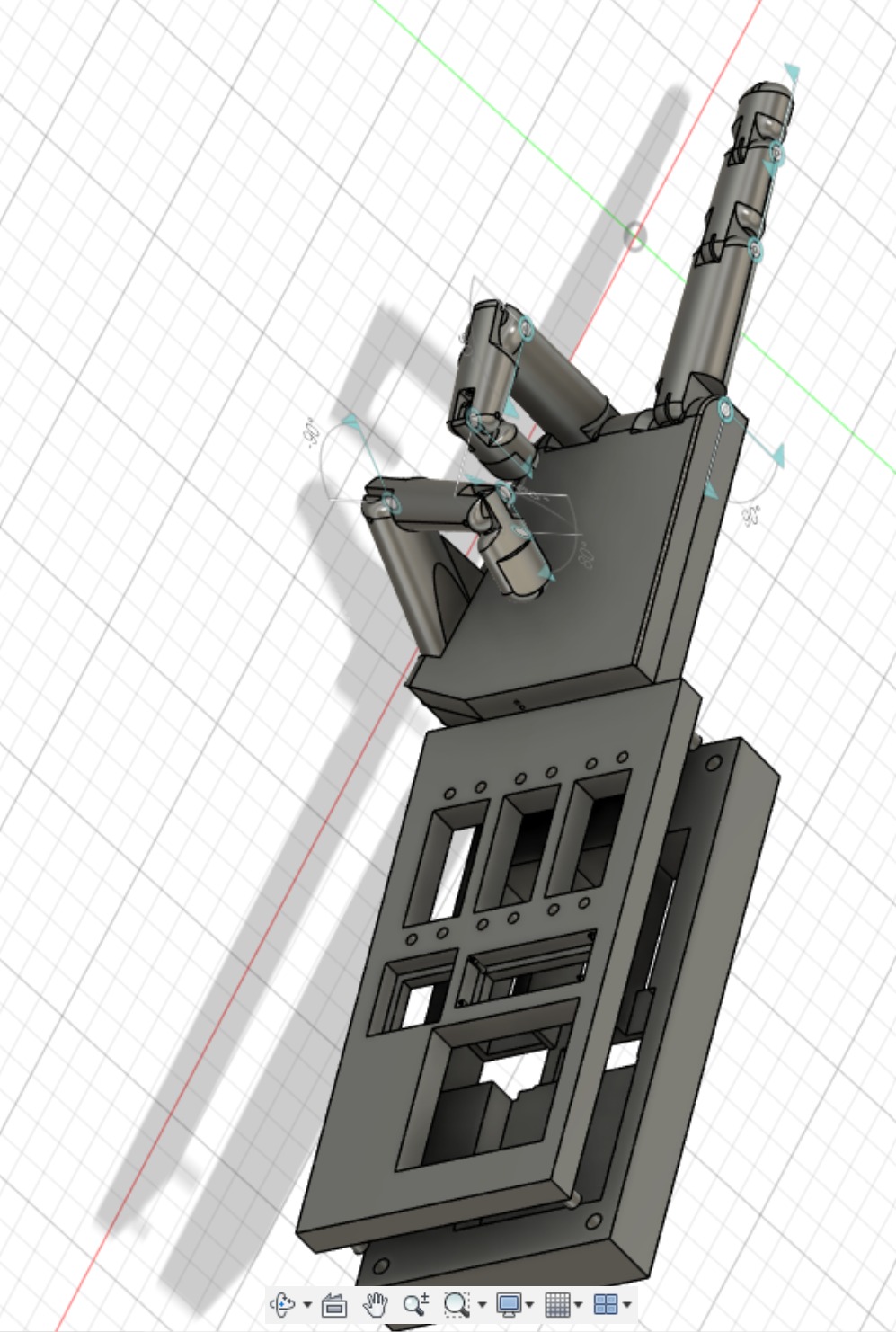
Our project is a prosthetic hand which restores grasping capability of amputees using a 3D printed thumb and two fingers applying Electromyography (EMG). EMG electrodes are placed at the forearm targeting three different muscle groups: pronator teres, palmaris longus and flexor digitorum superficialis. The EMG receives raw muscle signals from these muscle groups which are converted to electrical signals by the EMG. The signals are smoothened using filters including a band pass filter, noise filter and a notch filter which prevents baseline drift elimination. The supply voltage of the EMG is +/- 9V dual power supply maximum, +/- 3.5V minimum. These electrical signals are transmitted to the Arduino Nano ARP2040 Connect [ABX00052] which operates at 20MHz with 5V supply voltage. The three NANO V3.0 controller boards are programmed and operates the three MG995 servo motors which offer a 180 degree rotation with high speed torque. Hardware components of our project are embedded in a 3D printed forearm frame. Trilene 100% Fluorocarbon strings are attached to the servo motors which facilitate the movement of the fingers. Opening and closing of prosthetic fingers is activated only when the raw EMG signal reaches the threshold of 250.
The scope of our project is to build a prosthetic hand which allows amputees to restore artificial grasping capability while moving the natural portion of the arm. The pathway in accomplishing our scope is by using Electromyography (EMG) which provides real time experience to amputees in moving their thumb, index and middle finger. There are 11-16 3D printed parts in our prosthetic hand to mimic the phalanges and possess joints similar to a natural hand. The 3 pins from the servo motors are connected to the Arduino, Red: 5V Brown: Ground Yellow: Control in order to operate from the electrical signals detected. Our device is built for amputees without a hand. The project requires background knowledge and research from key subjects encompassing electronics, digital electronics, biology(anatomy), coding(C++), 3D printing/modelling and troubleshooting. Our product’s ability towards modifications and innovations which allows customers to experience hybrid and upgraded versions of our product makes it standalone from other projects and prosthetics across the biomedical industry.

Powered by Acadiate
© 2011-2026, Acadiate Inc. or its affiliates · Privacy