
 CLOSE SIDEBAR
EL 07 - Open-Source Design of Neonatal Syringe Pump
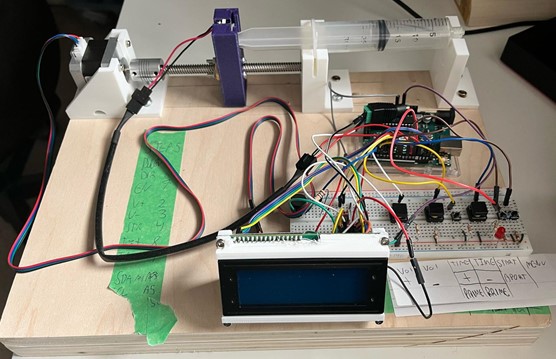
The project focuses on an open-source design of a neonatal syringe pump to improve accessibility for healthcare to low- and middle-income regions around the world. This device was designed to meet biomedical standards while remaining low cost, customizable and easy to maintain. Most of the electrical and mechanical components are off the shelf and readily available, including limit switches, stepper motor, driving board and main Arduino board. The device aims to be a practical alternative to commercially available devices.
Functionality and Features:
The syringe pump is currently functional for a 30 mL syringe which is the requirement for neonate nutrition and feeding. The syringe pump has a priming menu that allows air bubbles to be removed from the tubing before use. The infusion rate can be adjusted by changing the volume and time. The pump also features a security alarm (sound and LED) for improper syringe position that will result in infusion being aborted.
Motivation and Objectives:
According to UNICEF, an estimated 2.5 million neonates’ death occurred within first 28 days of life from preventable causes in 2019 and 30 million were at risk. Premature neonates have an increased risk for dehydration, hypoglycemia, and electrolyte imbalance, that can be prevented using syringe pumps. Syringe pumps are essential healthcare equipment that aids in delivery of fluids, such as electrolytes, water, and glucose to small and sick babies to help provide energy needed for key metabolic processes The economic standing of an area or a country is directly linked to the healthcare accessibility within it. A decrease in public healthcare spending affects the communities most vulnerable, especially in low to mid income areas. The syringe pumps cost anywhere from 600 CAD to 4000 CAD excluding maintenance and repair cost. Having access to an essential device, such as syringe pump can help save lives globally. The project aims to deliver a low-cost open-source design for a syringe pump that can be modified and maintained according to healthcare standards locally to help resolve accessibility barriers to life-saving care in neonates.
Updated
1 year ago
Powered by Acadiate
© 2011-2026, Acadiate Inc. or its affiliates · Privacy