
 CLOSE SIDEBAR
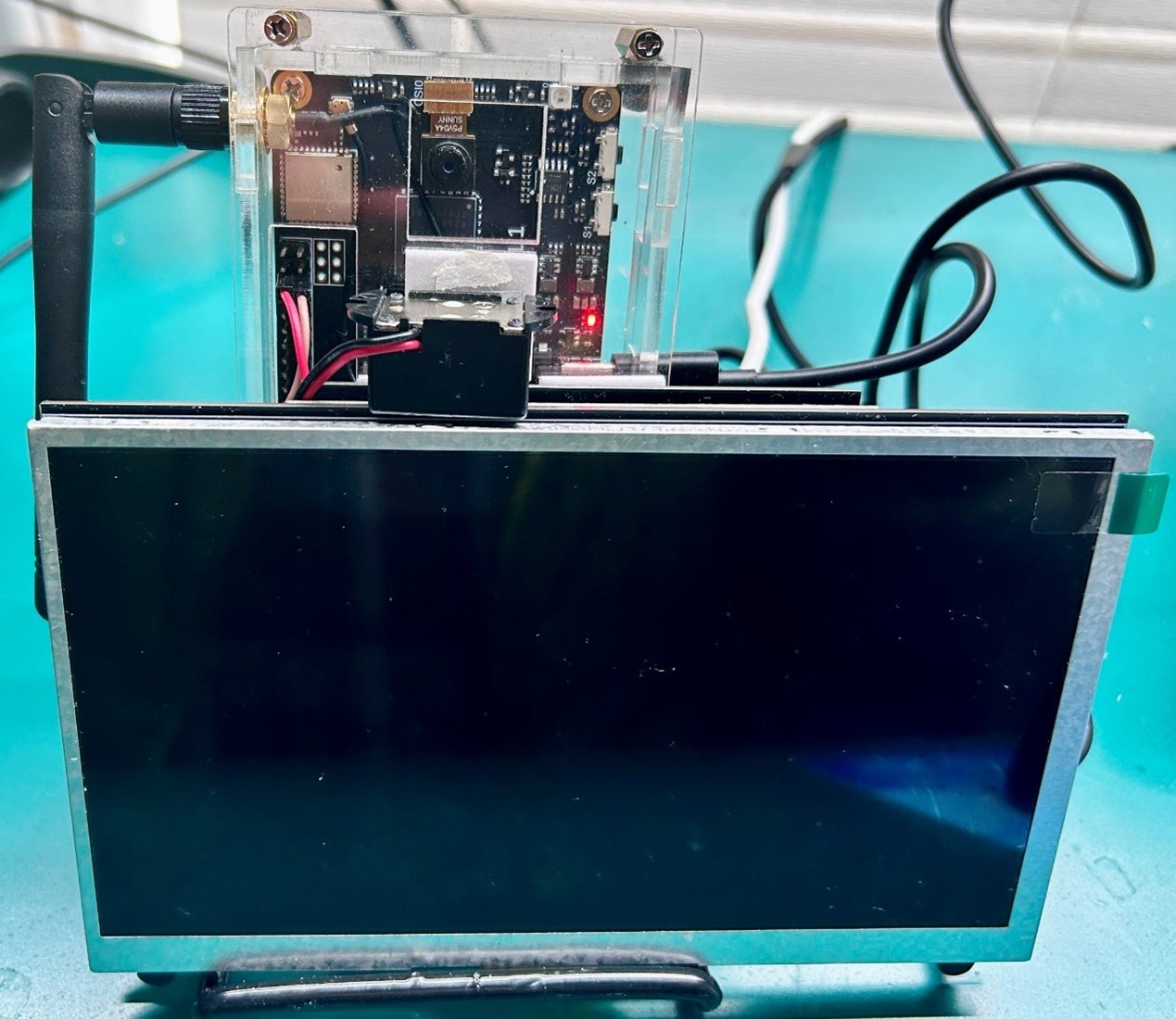
EL 14 - Driver Fatigue Detection System using AIoT
The Driver Fatigue Detection System is an innovative safety solution designed to enhance road safety by monitoring drivers for signs of drowsiness. Built around the CanMV-K230 development board, this system employs advanced artificial intelligence to analyze real-time visual data, focusing on eye movements and head positioning. By detecting indicators of fatigue, such as prolonged eye closure or head nodding, the system triggers timely auditory and visual alerts to warn the driver, helping to prevent accidents caused by drowsiness.
The core of the system is the Kendryte K230 System-on-Chip (SoC), which features dual RISC-V cores, and a Knowledge Process Unit (KPU) optimized for AI-based inference. This hardware enables efficient processing of visual data captured by a high-resolution camera sensor connected via a MIPI-CSI interface. The camera continuously records the driver’s face, providing a steady stream of images that are preprocessed and fed into AI algorithms. These algorithms, running on the K230’s KPU, analyze patterns in eye behavior and head orientation to identify fatigue with high accuracy. Upon detection, the system activates a buzzer and LED indicators to alert the driver, ensuring immediate awareness of their drowsy state.
The software architecture is structured to maximize efficiency and reliability. It includes a media interface layer to manage camera input, a driver layer to handle hardware communication, and an application layer comprising image processing, fatigue detection, and alert modules. The image processing module prepares raw camera data for AI analysis, while the fatigue detection module executes the inference process. The alert module ensures that warnings are clear and effective, using both sound and light to capture the driver’s attention. The system also supports optional data logging, allowing fatigue events to be recorded for post-trip analysis, which could be valuable for fleet management or driver training programs.
This project was developed to address the critical issue of drowsy driving, a leading cause of road accidents worldwide. Fatigue-related crashes are preventable, yet they continue to pose a significant risk due to the lack of accessible, real-time monitoring solutions. By leveraging the low-latency, high-performance capabilities of the CanMV-K230 board, this system offers a cost-effective and scalable approach to driver safety. Unlike traditional solutions that may rely on complex vehicle integrations, this system operates independently, focusing solely on visual cues from the driver. This design choice makes it adaptable to a wide range of vehicles, from personal cars to commercial fleets, without requiring extensive modifications.
The motivation behind creating this system stems from a commitment to improving road safety through technology. Drowsy driving is a universal problem that affects drivers of all ages and experience levels, often with devastating consequences. By combining AI-driven vision algorithms with affordable, powerful hardware, this project aims to make fatigue detection accessible to more drivers, reducing the likelihood of accidents and saving lives. The system’s real-time processing ensures minimal delay between detection and alerting, while its low-power design makes it practical for continuous operation during long drives.
Future enhancements could include integration with additional sensors, such as heart rate monitors, to further improve detection accuracy, or connectivity with mobile devices for driver notifications. The project demonstrates the potential of AIoT (Artificial Intelligence of Things) in automotive safety, showcasing how compact, intelligent systems can deliver impactful solutions. Through this work, we hope to contribute to a future where technology plays a central role in preventing fatigue-related accidents, making roads safer for everyone.
Updated
1 year ago
Powered by Acadiate
© 2011-2026, Acadiate Inc. or its affiliates · Privacy