
 CLOSE SIDEBAR
EL 05 - USB Hi-Fi Audio Docking Station
The USB High-Fidelity Audio Docking Station is an innovative project developed to address the limitations of modern smartphones in delivering high-resolution audio. With music streaming services offering audio quality up to 24 bits/192 kHz, most smartphones underutilize these capabilities due to limited internal DACs and the removal of analog audio outputs. Therefore, this open-source project aims to offer a feature-enriched High-Fidelity Audio playback solution for mobile devices.
Problem Description
Although virtually all smartphones have the resources to internally stream Hi-Res Audio, they cannot deliver said quality to the user’s ears. furthermore, using existing commercial solutions occupies all the available IO ports of the device, thus limiting the number of peripherals connected to the smartphone. The following points can be highlighted:
- Phone Internal DACs are usually limited to CD qualities (16 bits/44.1kHz)
- Analog Audio Outputs have been removed on higher-end Apple/Android devices.
- Current market alternatives rely on the USB host to provide power.
- Since most phones have a single USB-C port, using an external DAC utilizes all the ports available for other IO operations.
- To obtain an extended functionality, multiple adapters need to be daisy-chained, offering unreliable connections.
Why did we create this project?
Based on the deficiencies spotted in the current commercial alternatives, we envisioned an affordable, modular, self-powered, and open-source solution for casual audiophiles and electronics enthusiasts by enabling high-fidelity audio playback while simultaneously charging the connected device.
The USB High-Fidelity Audio docking station would ensure an uninterrupted and seamless listening experience by eliminating the need for multiple adapters. Furthermore, the open-source design (available at https://github.com/Jozambra/Cellphone-High-Fidelity-Audio-Interface.git) provides a market-competitive product with room for extra features to be further developed.
More specifically, we developed the following general requirements:
- To be able to support at least 48 kHz playback quality.
- Be cross-platform compatible with Android and iOS.
- Provide charging capabilities to the smartphone streaming the music.
- Offer upgradability to their users.
What does the project do?
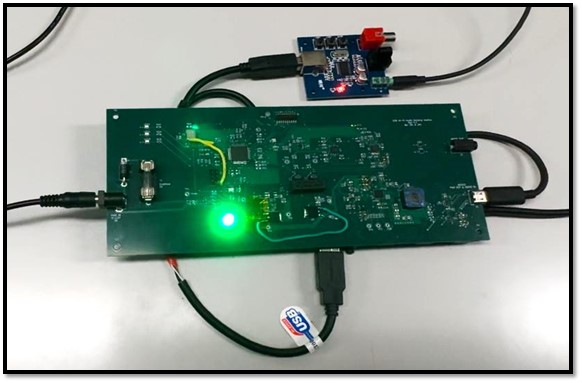
The docking station employs a modular hardware design, integrating cross-platform protocols like USB Audio Class 2.0 for broad compatibility and USB Power Delivery (PD) to enable efficient device charging and comply with the Common Charger Directive 2022/2380 from the EU. Additionally, the modular approach simplifies repair, upgrades, and troubleshooting. The software integrates open-source libraries from XMOS to facilitate audio processing and ensure compatibility across operating systems.
To also offer a simpler ultra-low-cost alternative, an alternative DAC design based around the PCM2704 DAC from Texas Instruments is provided; however, this substitute limits the maximum sampling rate to 48 kHz. Nevertheless, this generates a plug-and-play solution ideal for individuals little experience with embedded programming.
Challenges and Overcoming
After assembling the first prototype board, the following challenges were faced:
- Thermal drift of voltage reference.
- Bugs in the XUF208 porting of the USB audio application.
- Protocol, incompatibilities for USB-C to USB 2.0 bridge.
Extensive troubleshooting and further research allowed us to implement the following measures for the next revision of the prototype:
- Designated a new ground node for referencing the measurements and the regulator’s output.
- Implementation of the newest revision of the XMOS USB Audio Library using the optimized VS code version (WIP).
- Incorporation of an external USB hub to manage data more effectively and to improve device compatibility. While the USB hub added to the overall cost, it introduced valuable features like multi-device connectivity.
Testing and Future Developments
Testing confirmed that the docking station achieved its primary objectives. It successfully reproduced audio at high-fidelity sampling rates of 48 kHz, provided consistent charging power, and demonstrated compatibility across various operating systems. Although the PCM2704 DAC limited the device's maximum audio resolution compared to the proposed XMOS chip, the alternative design prioritized ease of use and compatibility within budgetary constraints. The addition of a USB hub also increased functionality, allowing the connection of multiple devices and expanding potential use cases.
The project’s modular design proved to be a significant strength, facilitating alternative designs to better fit the user’s requirements. This approach also offers opportunities for future enhancements, such as integrating a higher-performance DAC to support greater sampling rates and embedding the USB hub directly onto the board to reduce costs and sizes. Expanding the output options to include TOSLINK and S/PDIF could further improve compatibility with a broader range of audio equipment, as included in the current prototype. Future possible developments also include a custom encasing based on the module combination of choice.
Conclusion
In conclusion, the USB High-Fidelity Audio Docking Station successfully blends technical innovation, market relevance, and practical functionality. Furthermore, the solution addresses common audio consumers' concerts, such as high-fidelity reproduction with simultaneous charging, all while remaining within a restricted budget of less than $100. The project serves as a novelty for affordable and customizable Hi-Fi solutions, inviting further development by electronics and audio enthusiasts and professionals. Its open-source nature and modular design ensure that the docking station is a practical solution and a baseline for future innovations in consumer audio technology.
Updated
1 year ago
Powered by Acadiate
© 2011-2026, Acadiate Inc. or its affiliates · Privacy