
 CLOSE SIDEBAR
ARCH 16 - The Last Thing Toronto Needs Is Another Energy-Guzzling, Environment-Polluting High-Rise
This project proposes a bold, sustainable alternative to traditional high-rise development in Toronto. Rather than contributing to the city’s growing skyline of energy-guzzling towers, this initiative reimagines underused urban land, known as grayfield sites, as vibrant, mixed-use communities. Grayfields include spaces like outdated shopping plazas, vacant parking lots, and former industrial zones that already have access to roads, transit, and services. Instead of expanding the urban footprint or straining existing infrastructure, this approach revitalizes what’s already there.
At its core, the project aims to transform grayfield sites into walkable, community-oriented neighborhoods. These developments blend mid-rise housing with ground-level retail, co-working spaces, daycare centers, drop-clinics, and public gathering spaces. They are built with a strong emphasis on sustainability, incorporating passive design strategies, energy-efficient systems like building envelopes, rooftop gardens, rainwater harvesting systems, and native landscaping. By encouraging walking, cycling, and transit use over car dependency, they significantly reduce emissions and environmental impact.
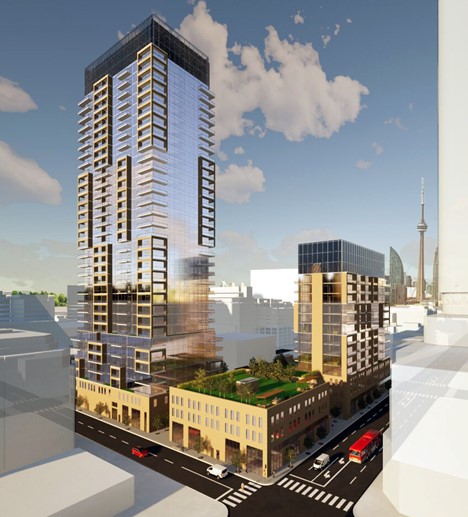
The project, Urban Nexus, is a testament to the strength and spirit of Toronto’s rich industrial past, seamlessly woven into the city’s dynamic present. It is proposed on an existing grayfield site in downtown Toronto at 177 Front Street East. It comprises of a podium, 32-level condo tower, and a 10-level subsidized apartment tower. There are two lower levels dedicated to parking, services and storage for the tenants. The buildings all follow the Ontario Building Code and place safety and equality at the heart of the development. Locally sourced materials along with reclaimed elements like brick and wood help reduce the carbon footprint.
This project was created in response to Toronto’s growing development challenges. The unchecked rise of high-rises has brought with it a host of problems like rising housing costs, neighborhood displacement, energy overconsumption, and a loss of community identity. While urban growth is inevitable, how we grow makes all the difference. This project challenges the status quo by prioritizing human-scale design, environmental responsibility, and long-term livability.
Beyond the environmental benefits, these mixed-use developments foster social equity and economic resilience. They provide a diverse range of housing options including affordable and co-op units, while supporting local businesses and creating inclusive public spaces. These neighborhoods are not just places to live; they are places to connect, thrive, and belong.
Globally, cities are shifting away from vertical sprawl and toward more grounded, people-first development. Toronto has the tools, the land, and the opportunity to do the same. This project shows that mixed-use grayfield redevelopment isn’t just a possibility, it’s a practical, proven solution for building more sustainable, soulful, and inclusive communities.
In short, this is more than just a design concept. It’s a call to rethink how we build, who we build for, and what kind of future we want to create. It’s about replacing energy-intensive towers with thoughtful, community-centered developments that work with the city, not against it. Let’s stop reaching for the sky just because we can and start building a city that’s grounded in sustainability, equity, and common sense.
Updated
1 year ago
Powered by Acadiate
© 2011-2026, Acadiate Inc. or its affiliates · Privacy