 CLOSE SIDEBAR
Ivy Venier
Ivy Venier
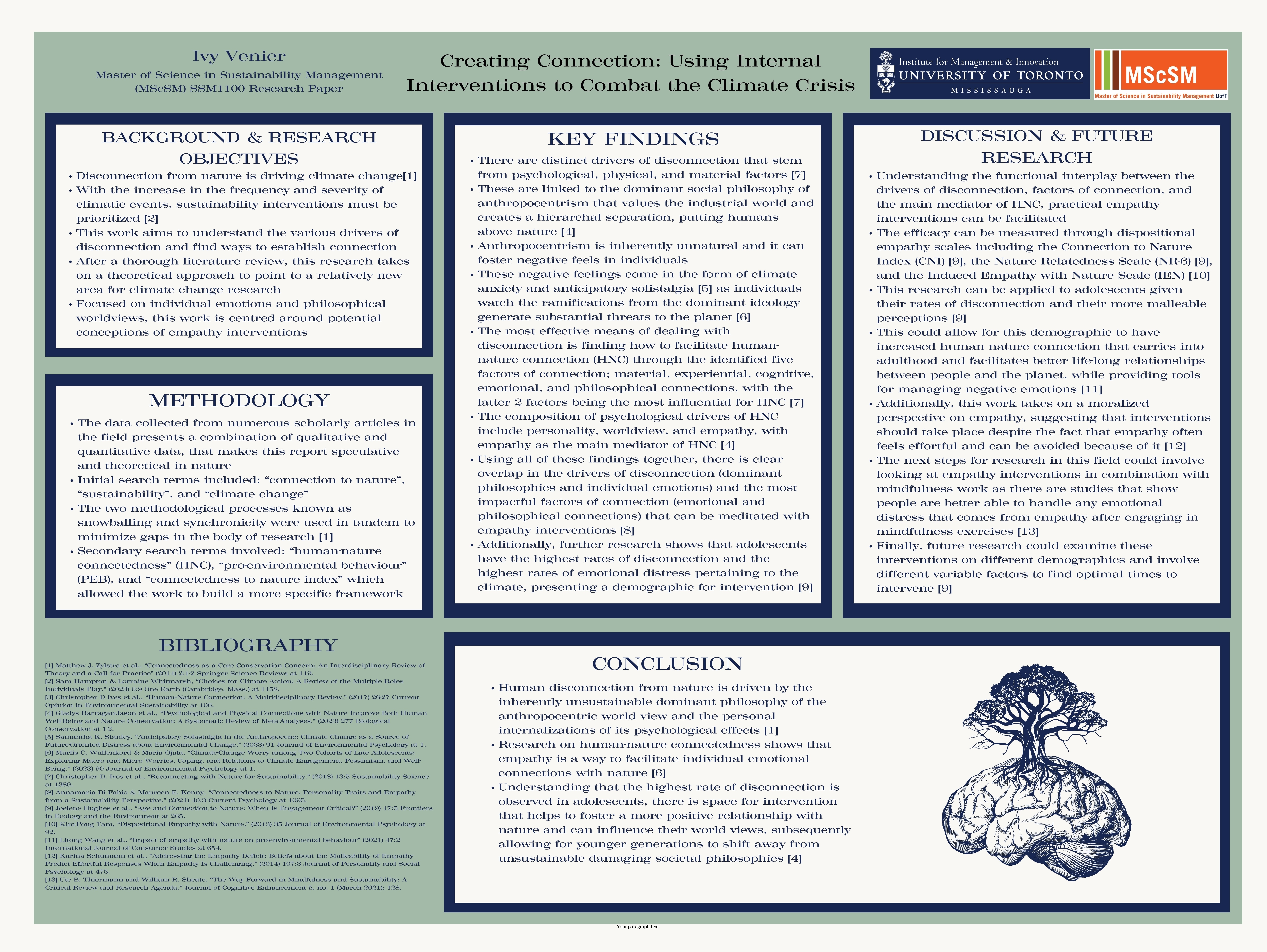
Disconnection is driving climate change. This disconnection can be seen on an individual level and must be tackled at an individual basis. The most common causes of disconnection stem from social and individual drivers such anthropocentrism, climate anxiety, and anticipatory solastalgia. With these factors being felt at much higher rates by adolescents, this work aims to find a solution. Connectedness to nature is correlated with conservation efforts and there could be a myriad of benefits to increased connectedness (health, wellbeing, and climatic benefits). Interventions directed towards teenagers should be focused on internal work not external (philosophical and emotional) because it does not tip the systemic scales the same way. This looks to encourage new ways of thinking as these individuals head towards adulthood. Empathy interventions have immense potential in this realm and should be explored through studies involving compassion, climate anxiety and anticipatory solastalgia in a pragmatic and functional way that is conducive to action. There are many factors that play into personal connection, but empathy is the biggest mediator. Additionally, the widespread applicability of the proposed intervention techniques make this a worthwhile area of research. If adolescence as a whole is more connected, it could shake philosophies of anthropocentrism and create mass change in the way the world operates, from the inside out.

Powered by Acadiate
© 2011-2026, Acadiate Inc. or its affiliates · Privacy