 CLOSE SIDEBAR
 Join Meeting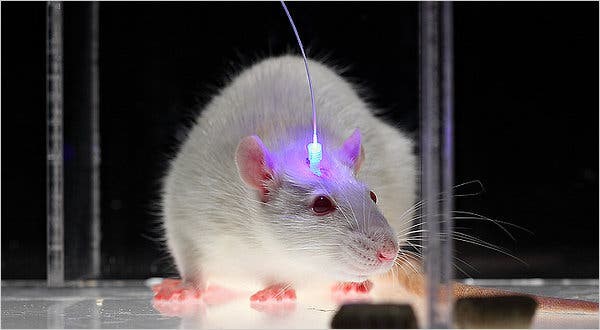
Optogenetic Stimulation of BNST Vasopressin Neurons Increases Sex-Specific Social Approach and Communication in Mice
Sumeet Singh, Nicole Rigney, Selma Belkasim (Faculty Sponsors: Dr. Aras Petrulis and Dr. Geert de Vries)
The neuropeptide arginine-vasopressin (AVP) has long been implicated in the regulation of social behavior and communication, often sex-specifically, but the source of AVP release relevant for behavior has not been precisely determined. AVP cells in the bed nucleus of the stria terminalis (BNST) are a major source of sex-different AVP expression in brain regions associated with social behavior. Consequently, to define the behavior-relevant sources, we bilaterally injected AAVs that express Cre-dependent channelrhodopsin-2 (ChR2; EF1a-DIO-hChR2(H134R)-YFP) for cell excitation or Cre-dependent fluorescent label only (YFP; EF1a-DIO-YFP) as a control, into the BNST of adult AVP-iCre+ male and female mice. After recovery, subjects underwent a total of four tests for social communication (scent marking, ultrasonic vocalizations) and social investigation in a three-chamber apparatus. Each subject received two test days with light stimulation and two test days without light stimulation with each stimulus type (male and female conspecifics). Finally, mice were tested on an elevated-zero maze (EZM) for anxiety-like behavior. Preliminary results indicate that, in male mice, stimulation of BNST AVP-expressing neurons increases social investigation of male and female conspecifics and increases male scent marking toward female conspecifics. Additionally, stimulation of these neurons decreases male anxiety-like behavior in the EZM. In females, stimulation of BNST AVP neurons did not alter any behaviors measured. These results point to differential involvement of BNST AVP neurons in male social behavior and communication. Similar sex differences in the neurochemical underpinnings of behavior may contribute to sex differences in disorders of social behavior and communication.

Powered by Acadiate
© 2011-2026, Acadiate Inc. or its affiliates · Privacy