 CLOSE SIDEBAR
 Join Meeting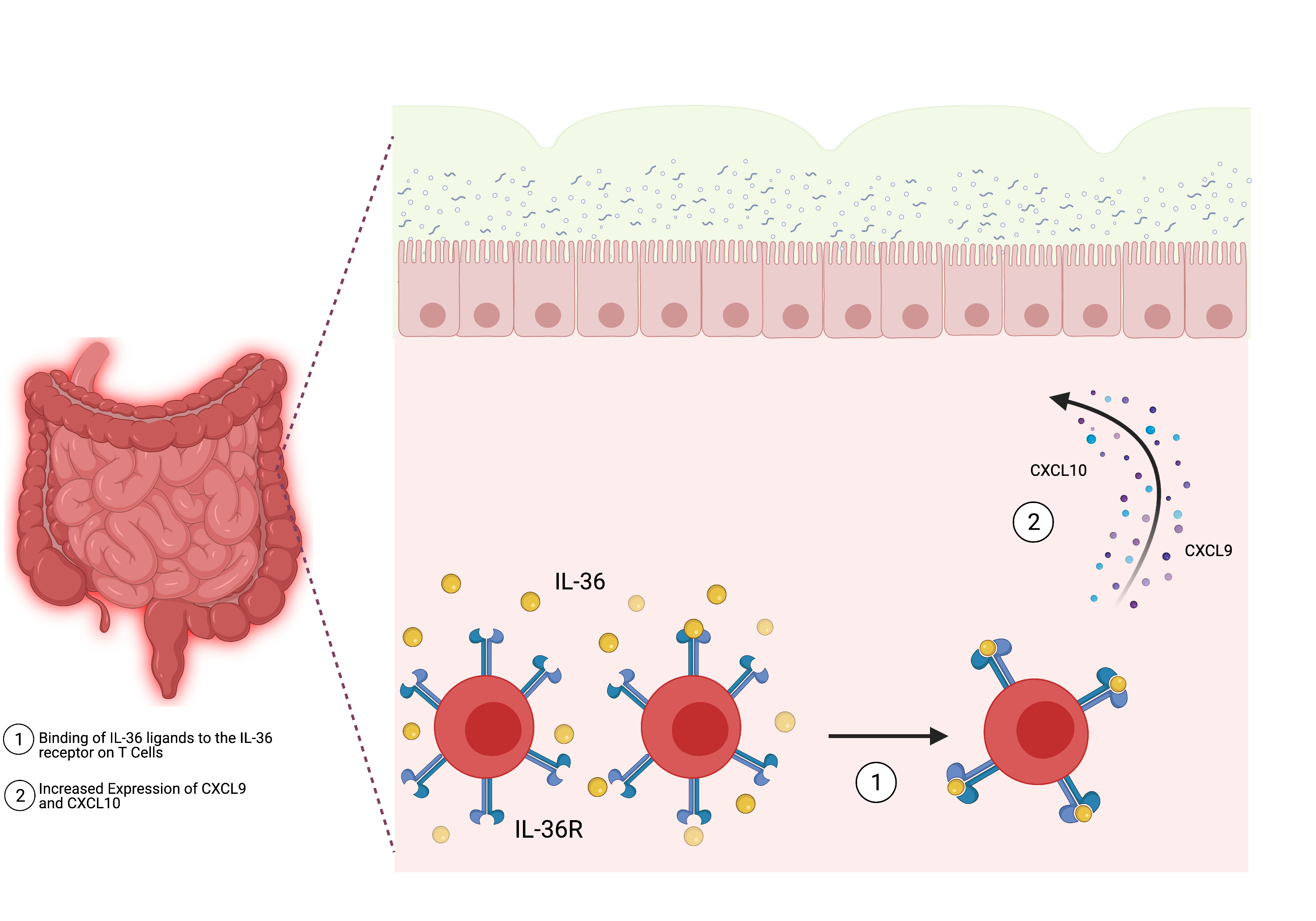
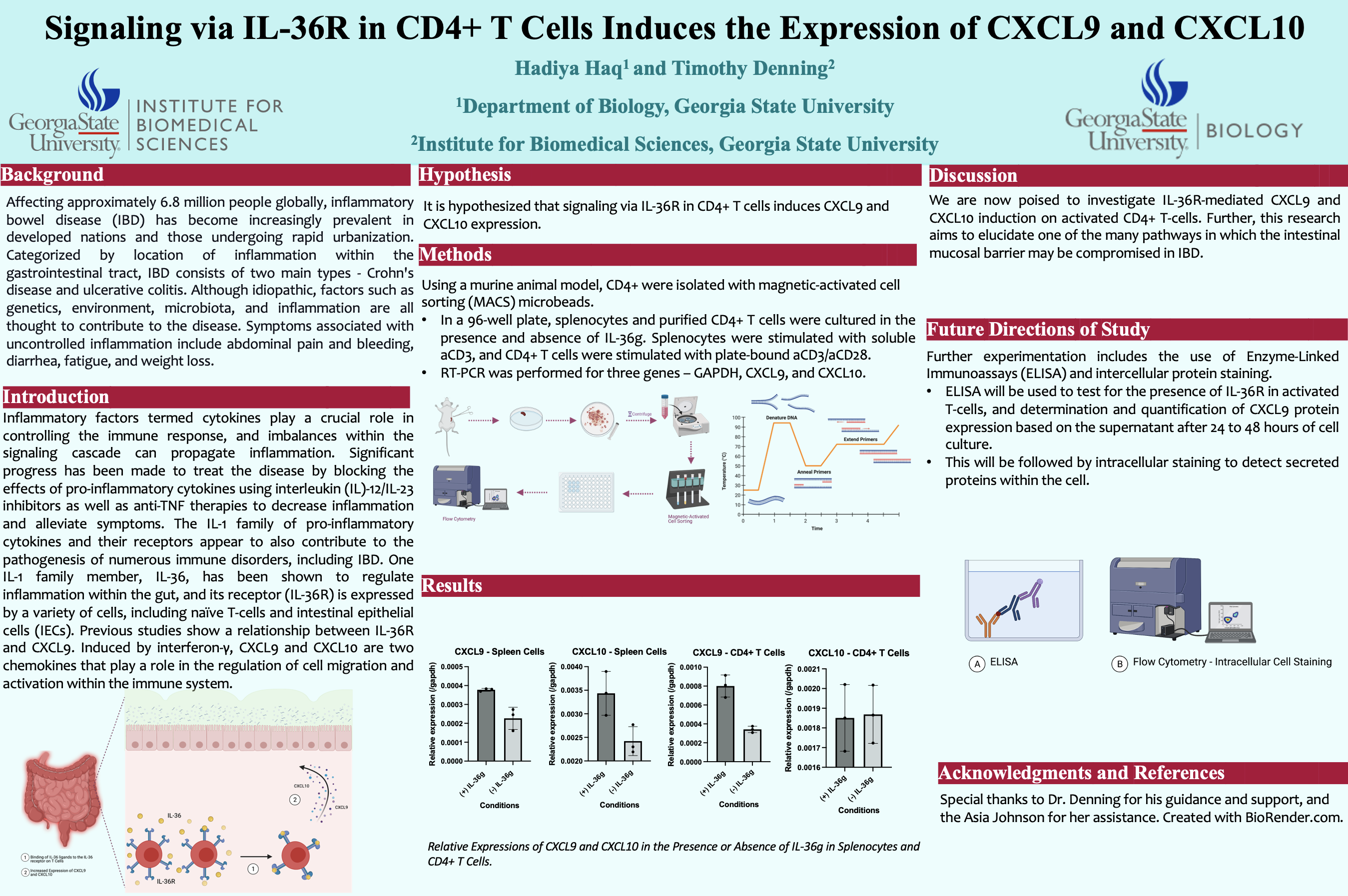
Signaling via IL-36R in CD4+ T Cells Induces the Expression of CXCL9 and CXCL10
Hadiya Haq (Faculty Sponsor: Dr. Denning)
Affecting approximately 6.8 million people globally, inflammatory bowel disease (IBD) is increasingly prevalent in developed nations. Categorized by location of inflammation within the gastrointestinal tract, IBD consists of two main types - Crohn's disease and ulcerative colitis. Inflammatory factors termed cytokines play a crucial role in controlling the immune response. The IL-1 family of pro-inflammatory cytokines and their receptors appear to contribute to the pathogenesis of IBD. One IL-1 family member, IL-36, has been shown to regulate inflammation within the gut, and its receptor (IL-36R) is expressed by a variety of cells including naïve T-cells and intestinal epithelial cells (IEC). Signaling via IL-36 receptor has been associated with an increase in CXCL9 and CXCL10 gene expression resulting in chemotaxis induction and differentiation of T-cells.

Powered by Acadiate
© 2011-2026, Acadiate Inc. or its affiliates · Privacy