 CLOSE SIDEBAR
 Join Meeting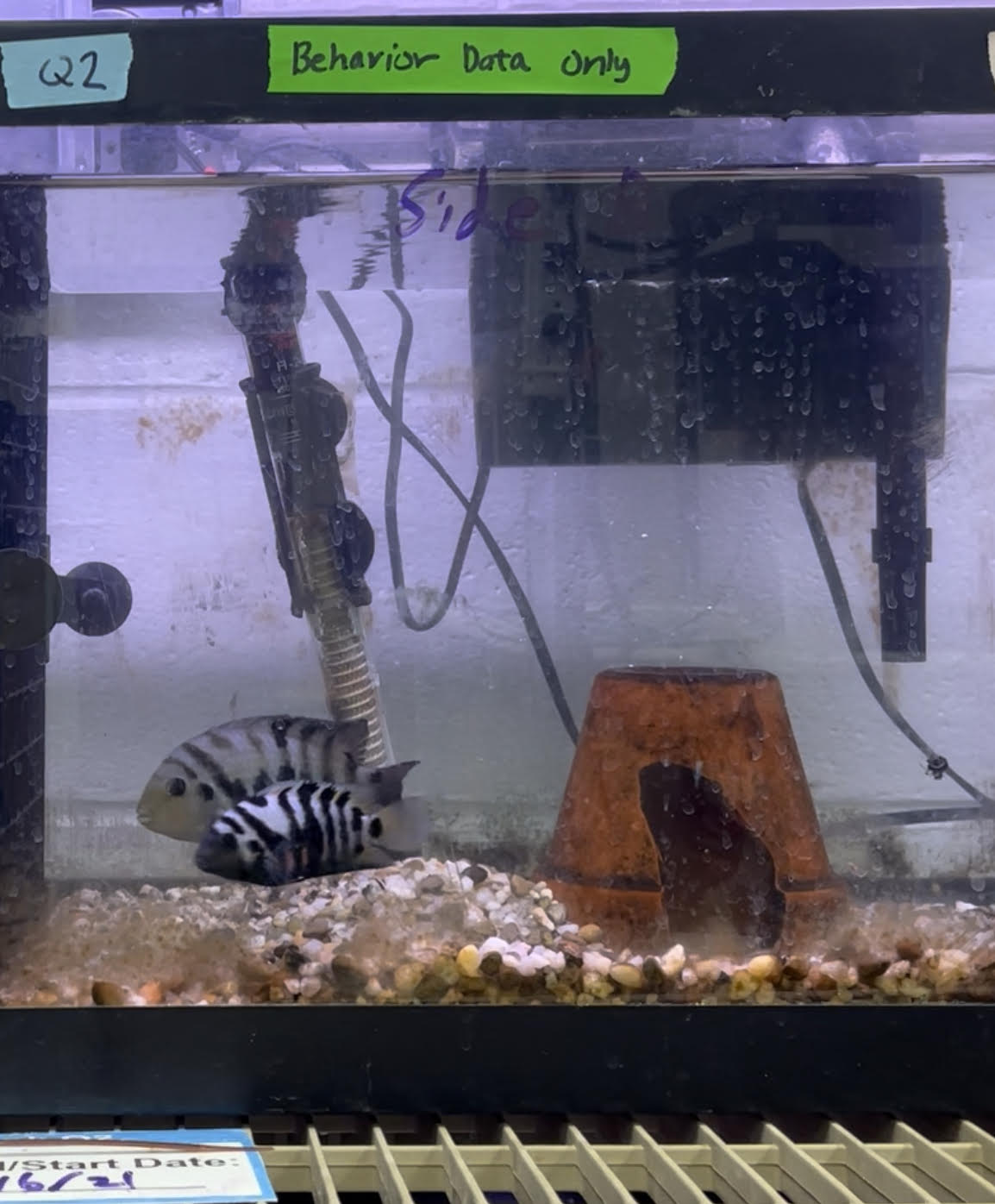
A Tale of Love and War: Exploring The Role of Cortisol Sychrony in Convict Cichlid Pair Bonding
Kiedon Bryant
The initial goal of this study was to develop a method for inducing pair bond divorce in Convict Cichlids. Instead, this study provided insights on the correlation between cortisol synchrony and intrapair behavior. Pairs underwent 10-minute behavioral observations followed by cortisol sampling at three different stages. Treatment pairs were separated for 48-72 h between the first and second time points. All pairs initially expressed high amounts of affiliation along with high cortisol similarity. Pairs that underwent separation either divorced or maintained their pair bond. The behavior of pairs who were not separated was mirrored by pairs that stayed together. However, the cortisol of the resilient pairs became unsynchronized. Pairs that divorced showed a decrease in affiliation along with an increase in aggression. After separation, these pairs showed a negative correlation in cortisol synchrony. During the final sampling their cortisol became synchronized again but was not indicative of their behavior. This study suggests that pair bonded individuals do express cortisol synchrony and that this synching of hormones can be interrupted and could potentially lead to pair divorce.

Powered by Acadiate
© 2011-2026, Acadiate Inc. or its affiliates · Privacy