 CLOSE SIDEBAR
JOIN WEBEX MEETING https://gsumeetings.webex.com/gsumeetings/j.php?MTID=mdbfa655e42ef1ce067fcac99a1bbe736 Meeting number (access code): 2623 621 2328 Meeting password: 5DqfUj TAP TO JOIN FROM A MOBILE DEVICE (ATTENDEES ONLY) +1-415-655-0002,,26236212328##
 Join Meeting
Investigating the role of reactive oxygen species (ROS) signaling in regulating noxious cold-evoked nociceptive behavior in Drosophila melanogaster
Inara Jawed, Jamin M. Letcher, Mariana Holguin-Lopez, Romee Maitra, Nathaniel J. Himmel, Akira Sakurai (Faculty Sponsor: Dr. Daniel N. Cox)
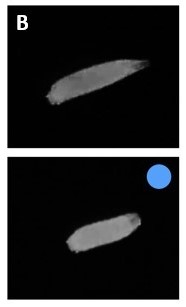
Nociception is the process by which an organism detects potentially painful stimuli, driving behavioral responses that minimizes damage and promote organismal survival. Noxious cold can be very harmful to living organisms and may lead to cell damage caused in part by the production of reactive oxygen species (ROS). Many animals respond to noxious cold by reducing the tissue surface available to cold. Drosophila melanogaster is one of the very few animals with a wide range of genetic tools to identify various neural mechanisms responding to potentially damaging/painful cold temperature. Drosophila larvae sense near-freezing temperature through Class (CIII) sensory neurons and respond to it via behaviors such as head-tail raising, forming u shape, or, predominantly, contracting (CT). Given that noxious cold increases ROS production in certain cells, and that ROS has been shown to activate TRP channels, we hypothesized that noxious cold will increase ROS production in Drosophila CIIIs and will hence contribute to their activation and to cold-evoked CT. Herein, we ectopically expressed dual oxidase (Duox) in CIII neurons to increase intracellular ROS and treated larvae to the cold plate behavior assay. We found that ectopically expressed ROS significantly increases CT in larvae compared to controls in response to noxious cold. Moreover, to determine whether or not endogenous ROS is sufficient to evoke CT behavior, we overexpressed ROS clearance enzyme catalase (Cat) and superoxide dismutase (SOD) to decrease ROS levels. Overexpression of SOD and Cat led to less CT relative to controls upon noxious cold exposure.
These results indicate that noxious cold-evoked behavior is subject to ROS-mediated regulation and provide us with greater insight into the cellular and molecular mechanisms responsible for the detection of noxious stimuli and, in the long term, may allow us to better comprehend human neuropathies, such as hyperalgesia and cold allodynia.

Powered by Acadiate
© 2011-2026, Acadiate Inc. or its affiliates · Privacy