 CLOSE SIDEBAR
Postprandial optogenetic inhibition of dorsal-intermediate hippocampal projections may affect energy intake in male rats
Raihaanah Bint Abdullah Muslim, Sherri B. Briggs, Steven Davis, Vivian Vu, Marise B. Parent (Faculty Sponsor: Dr. Parent)
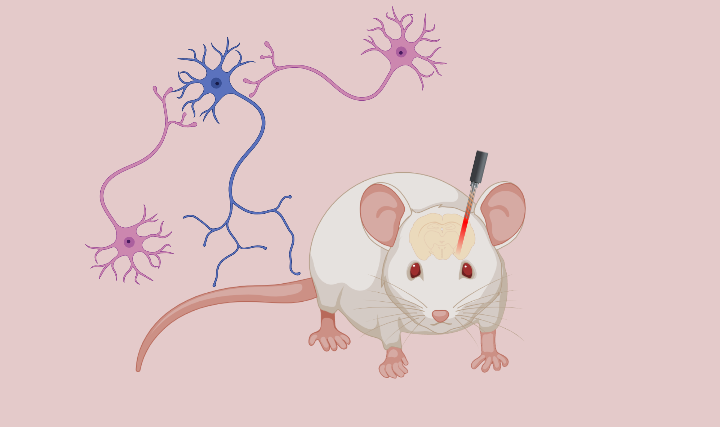
Episodic memories of a recently eaten meal have inhibitory effects on future intake. Experiments with human participants have shown that disrupting the memory encoding process while eating causes people to eat more at their next meal. We believe that the dorsal hippocampus, which is responsible for episodic memory, is involved in memory consolidation of a meal during the period after eating. Research from our lab has shown that optogenetic inhibition of dorsal hippocampal (dHC) glutamatergic neurons in Sprague Dawley rats given after a rat finished a meal increased the amount consumed during the next meal. However, the neural circuits by which the dHC affects food intake are unknown. Unpublished data from our lab reveal that dHC projects to the intermediate hippocampus (iHC), which is anatomically and behaviorally distinct from the dHC. The current study aims to identify the necessity of dorsal to intermediate hippocampal projections in energy intake. We hypothesize that dorsal to intermediate hippocampal projections inhibit energy intake. Male Sprague Dawley rats were injected with viral vectors containing CaMKIIα-eArchT3.0-eYFP into the dHC and fiber optic probes were implanted into the iHC. Our preliminary results suggest that inhibition of dHC synaptic terminals in the iHC immediately after a meal increases the amount consumed during the next meal. To validate our findings, we plan to repeat this experiment with more animals.

Powered by Acadiate
© 2011-2026, Acadiate Inc. or its affiliates · Privacy